Pigeon Forge is built for an easy, walk-up-and-enjoy kind of vacation, and getting around town is part of the fun once you know a few tips and local secrets.
Nearly everything you came for, from the shows to the shops, attractions, and mountain views, sits along one friendly stretch of road. Learn the Parkway once, and getting around town becomes second nature, leaving you free to focus on the fun instead of the drive.
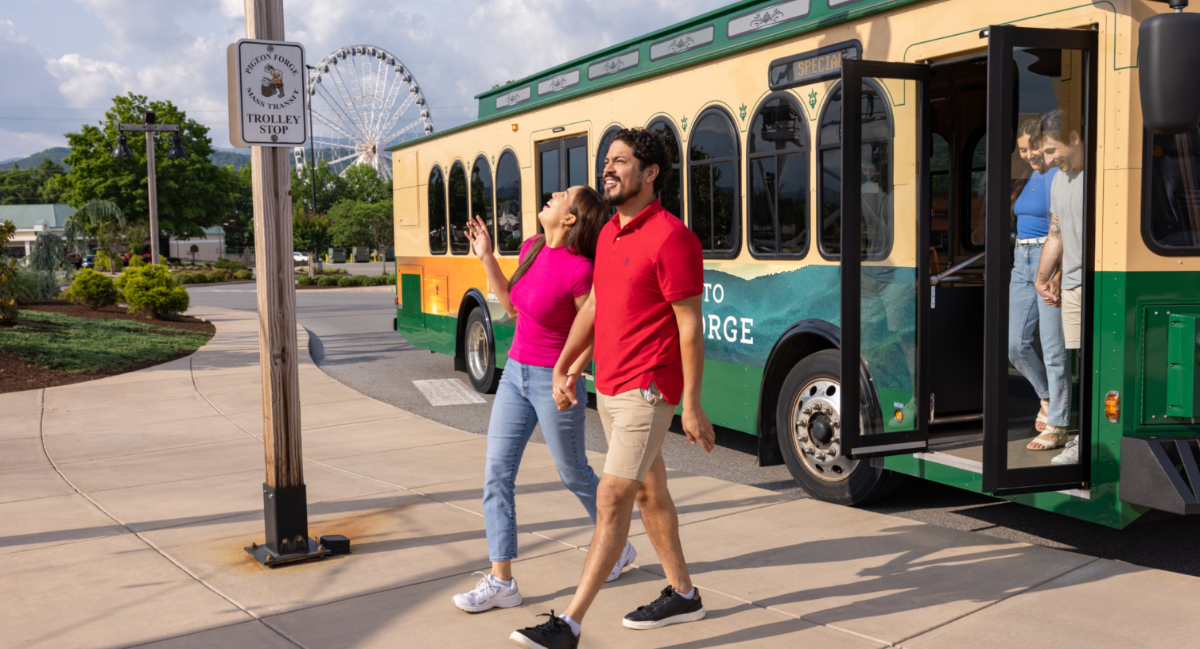
Here’s your insider’s guide to the quietest times to get around Pigeon Forge, the free parking lots, tips locals love, and the trolley that lets you park once and let someone else do the driving.
Key Takeaways
- The road that connects almost everything: The Pigeon Forge Parkway, or US-441, stretches roughly five miles through town, and nearly every hotel, restaurant, show, and attraction you’ll want to visit sits alongside it.
- Easiest hours to drive: If you can, plan your Parkway drives for the morning. Traffic is at its easiest, and it’s the perfect window for an early start into Great Smoky Mountains National Park.
- Dates that matter most: January to early March and September are the calmest stretches, and midweek days (Tuesday through Thursday) tend to move a little easier than weekends.
- Two roads for shortcuts: Teaster Lane and Veterans Boulevard both run parallel to the Parkway, allowing you to cut through town without hitting every light along the main stretch.
- Parking once beats parking five times: The city also offers free parking lots connected to attractions via the Pigeon Forge Riverwalk Trail or the Pigeon Forge Trolley, so you can park once and leave the car alone for the day.
Learn the Parkway Like a Local
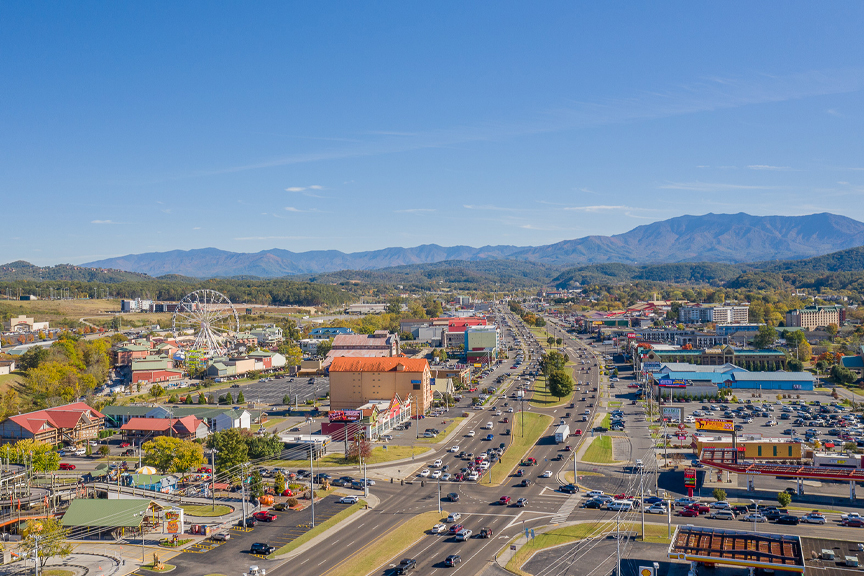
Almost everything in Pigeon Forge sits along the Parkway, which is why it’s so easy to find what you’re looking for.
Officially known as US-441, the Pigeon Forge Parkway comes down from Sevierville, runs straight through the heart of town, and continues south toward Gatlinburg.
The stretch through Pigeon Forge covers roughly five miles, with nearly every attraction, restaurant, show, and hotel fronting directly onto it.
Here’s the fun part: every traffic light on the Parkway has its own number, and locals use those numbers instead of street names to get around. Businesses advertise by light number too, so you’ll hear “we’re at light 6” far more often than an actual address — it’s worth learning a few before you go.
- Light 2: Where Teaster Lane meets the northern side of the Parkway, best known for its nearby family entertainment and theaters.
- Light 6: Where Pine Mountain Road connects to the Parkway, historically known as the center of town.
- Light 7: Arguably the most famous light in town, serving as a gateway to Old Mill Drive, Patriot Park, and the Pigeon Forge Mass Transit trolley station.
Insider tip: Once you’ve got lights 2, 6, and 7 memorized, you can place almost anything else in town without even glancing at a map. It’s the fastest way to stop feeling lost on the Parkway, and it makes every set of directions someone gives you far easier to follow.
Find Your Easiest Driving Window
Traffic builds steadily through the middle of the day, usually peaking in the late afternoon and early evening.
Here is how to plan your day around the easiest hours to drive:
- Before 10 a.m.: Your easiest driving window, a great time to cross to the far side of town.
- Late morning to mid-afternoon: Steady and slow, with heavy turning traffic in both directions.
- Late afternoon to early evening: The busiest stretch of the day, since hotel check-ins and dinner show crowds overlap. This is a great time to be settled in at a show or restaurant.
- After 9 p.m.: Traffic thins out noticeably.
Midweek days (Tuesday through Thursday) tend to move a little easier than weekends, while Friday afternoons and Saturdays are the liveliest as weekend visitors roll into town. Sunday late mornings run heavy in the opposite direction, as visitors check out and head back toward I-40. Shift your driving to Tuesday, Wednesday, or Thursday whenever you can, and you’ll feel like you’re in a different town altogether.
Before you head out each day, it’s always smart to check current road conditions and travel alerts along with statewide updates from Tennessee 511, so you’re always in the know.
Find Your Perfect Season
Every season in Pigeon Forge has its own personality and traffic trends, and knowing what each brings helps you pick the experience that’s right for you.
| Season | What drives the traffic | What to expect |
|---|---|---|
| January to early March | Cozy off-season, with indoor events at the LeConte Center at Pigeon Forge | The quietest driving of the year, with the wide-open Parkway |
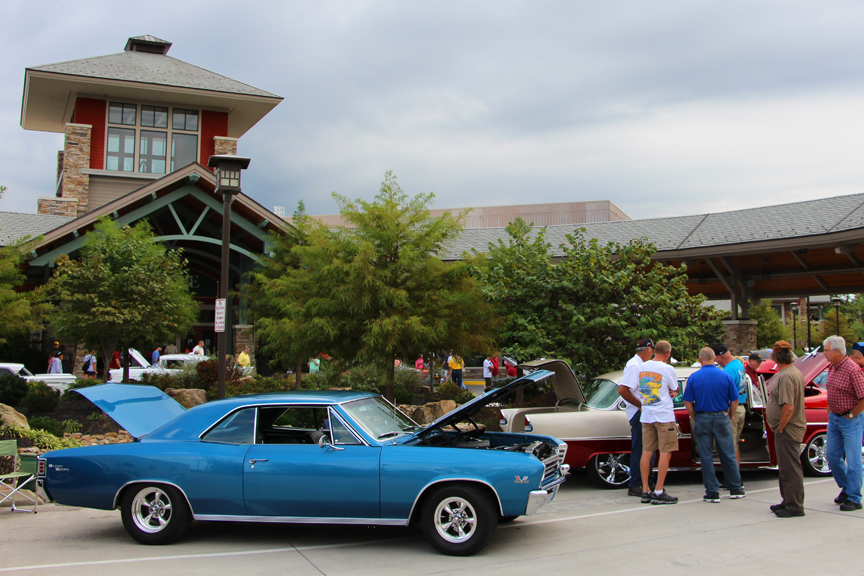
| Mid-March to April | Spring break week and the spring car show | Busy in bursts, with lively weekends and calmer midweek stretches |
| May to August | Summer break and peak family travel season | A bustling, high-energy town every day |
| September | Schools back, weather still warm | A noticeable drop, and one of our favorite hidden-gem windows |
| October to early November | Fall color in the Smokies | Popular all week, with weekends peaking when the color turns |
| Mid-November to December | Winterfest Driving Tour of Lights | Quiet days, with a festive evening glow on the Parkway |