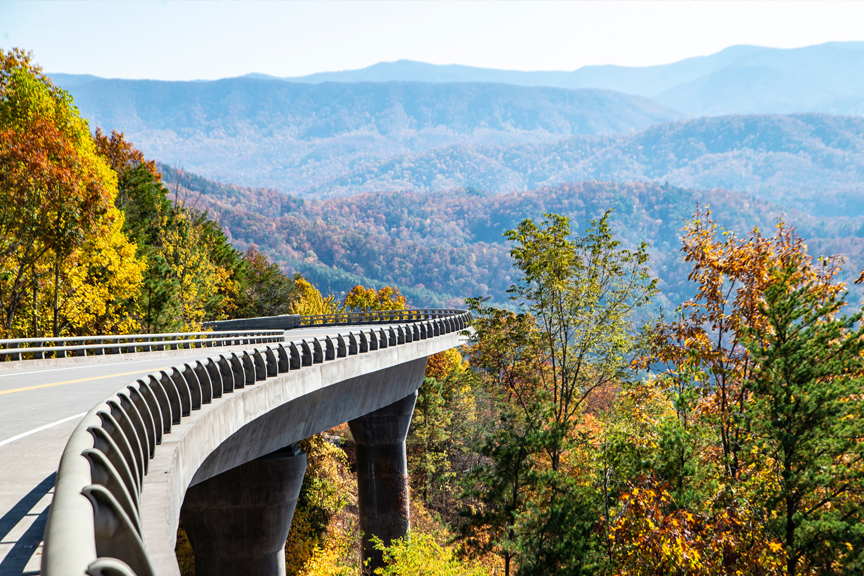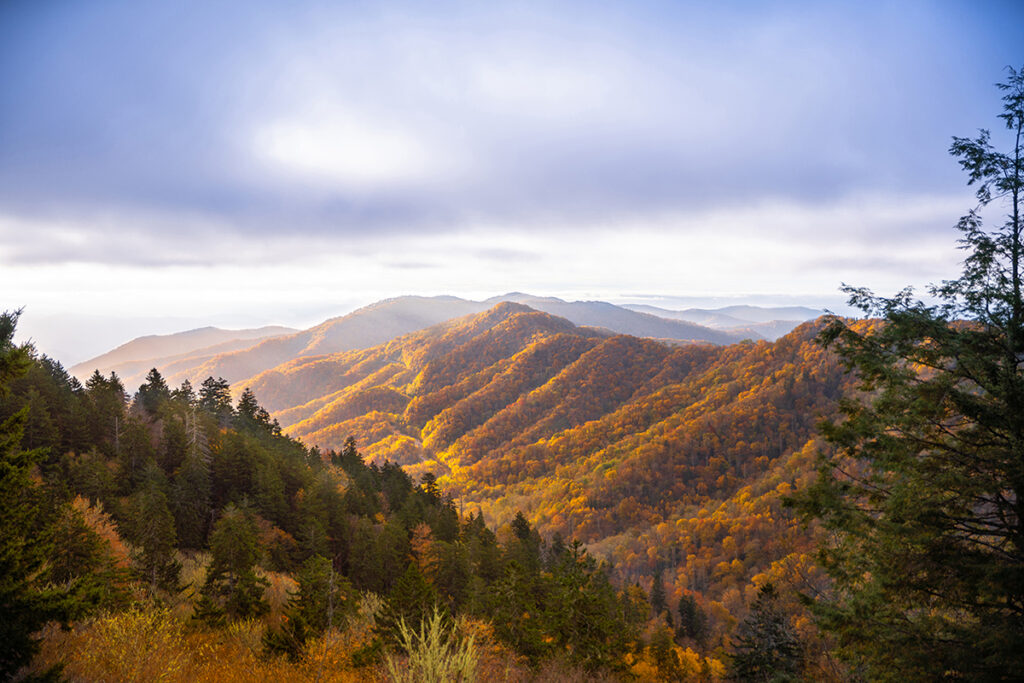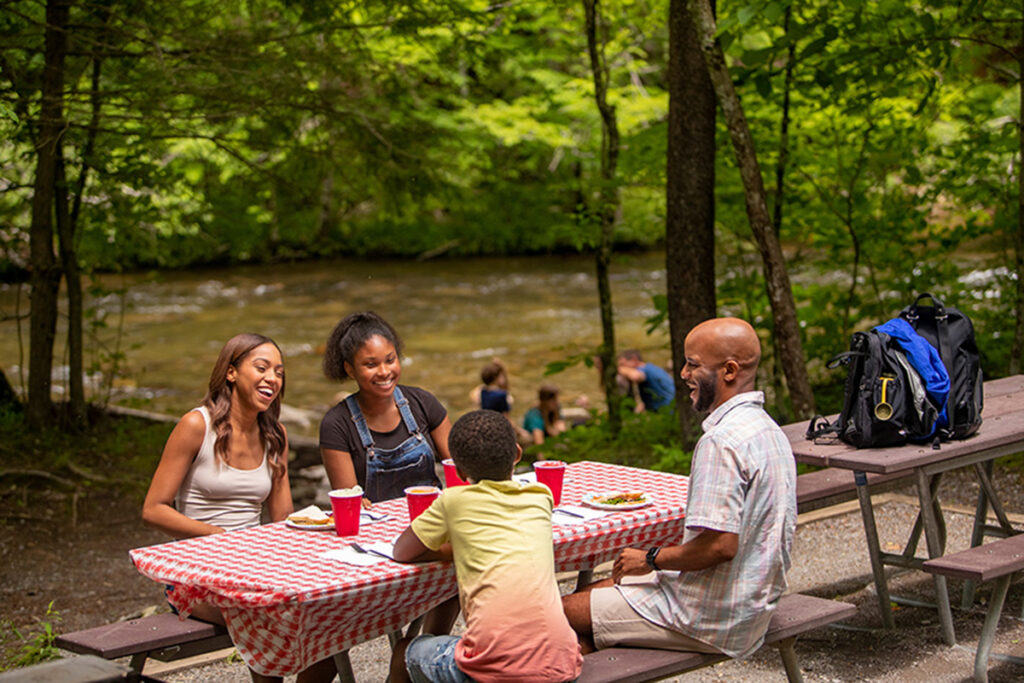

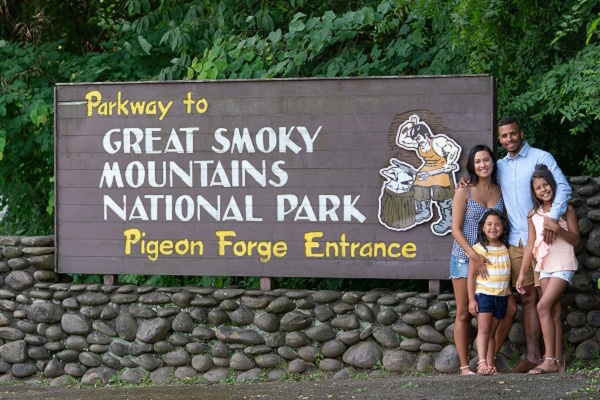

You don’t need to be a serious hiker to enjoy the park. Here’s how it fits three kinds of trips.
Families Planning a First Park Day
Trails in the Smokies run from easy to tough, so let the youngest legs in your group set the pace. It gets cooler as you climb, even in summer, so bring a light jacket. Start with these kid-friendly hiking trails, or browse all Smoky Mountains hiking trails.
Pet Owners Planning a Park Day
Pets are allowed in the park’s campgrounds and picnic areas as long as they stay on a leash, and two hiking trails welcome them too: the Gatlinburg Trail and the Oconaluftee River Trail. You’ll find details when you plan a pet-friendly park day.
Visitors Who Need Accessible Routes
Sugarlands Valley Trail, near Sugarlands Visitor Center, is a partially paved, nearly level half-mile path. Wheelchair-accessible campsites are available at Cades Cove, Elkmont, and Smokemont. The National Park Service describes the paved trail to Kuwohi as “very steep,” so it is not suitable for most wheelchair users without significant assistance. See more accessible ways to experience the park.
Backcountry camping is a different kind of trip. You’ll need a permit, which the National Park Service handles.
Smoky Mountains Attractions: Drives, Hikes, Views, and Wildlife
A park this size can feel like too much to plan. It gets easier when you choose based on how much time you have.
Scenic Drives: Cades Cove and Roaring Fork
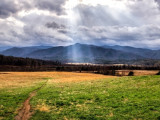
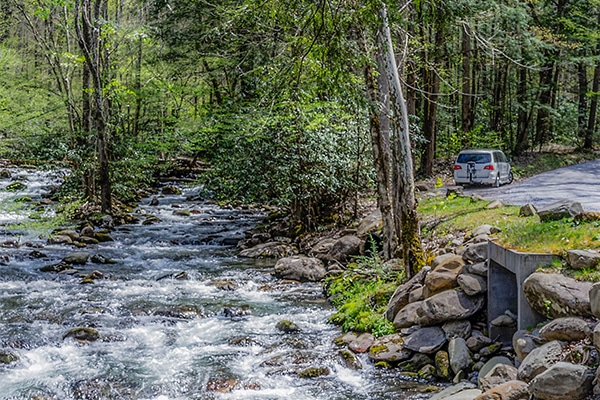
If time is short, drive the Roaring Fork Motor Nature Trail. The 5.5-mile one-way loop is a short drive from Pigeon Forge and generally open from mid-April through late November. Spend more of your day in Cades Cove, a scenic valley inside Great Smoky Mountains National Park known for wildlife, historic buildings, and an 11-mile one-way loop road. It sits about an hour from Pigeon Forge, and the loop takes two to four hours, with mountain views and wildflower meadows along the way. There are other scenic drives through the Smokies if you want more.
Hiking Trails and Waterfalls
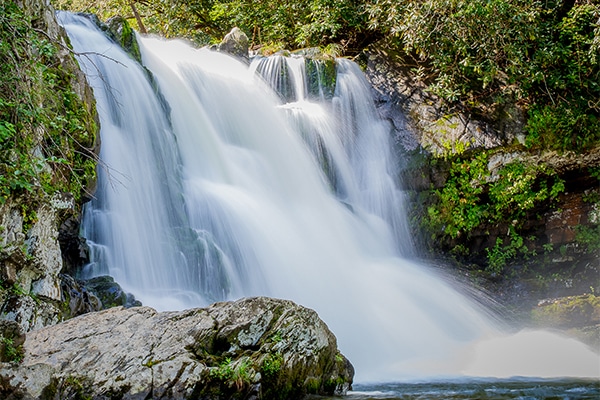
The park has more than 800 miles of hiking trails, including about 70 miles of the Appalachian Trail. The Grotto Falls trailhead sits on the Roaring Fork Motor Nature Trail, and the Rainbow Falls trailhead is on Cherokee Orchard Road just before the motor trail begins. That makes it easy to do the drive and a hike on the same outing. These waterfall hikes are a good place to start.
Mountain Views From Kuwohi
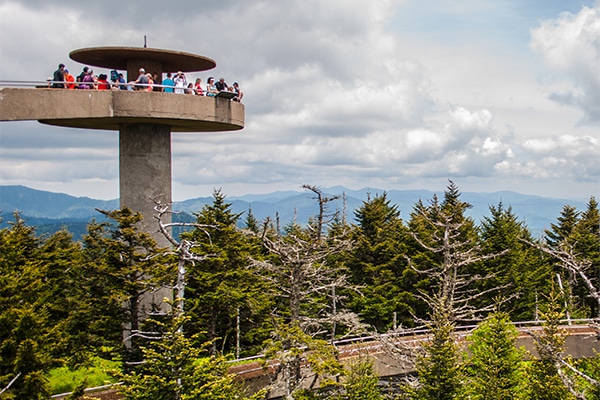
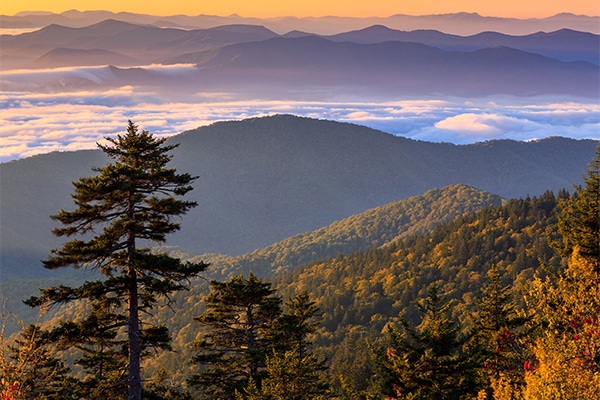
Kuwohi (formerly Clingmans Dome) is the highest point in Tennessee and the Smokies at 6,643 feet. A steep paved trail connects the parking area with the 45-foot observation tower a half mile away. The road to the summit typically closes from December 1 through March 31.
Wildlife Watching at a Safe Distance
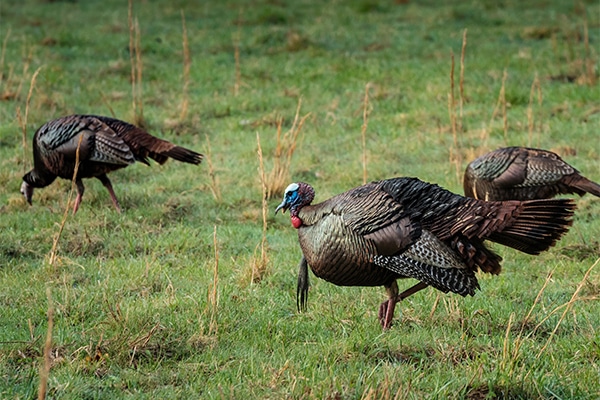
About 65 species of mammals and more than 200 kinds of birds are protected here, including elk and black bears. Approaching a bear within 50 yards (150 feet) is illegal, and feeding wildlife is prohibited. Come in late May or early June, and you may catch the synchronous fireflies; viewing at Elkmont is assigned through a lottery on Recreation.gov. See which Smoky Mountains wildlife you might spot.
With more days, add Cataloochee, Elkmont, the Mountain Farm Museum, or Mingus Mill at Oconaluftee. You’ll find places to stay in Pigeon Forge to match a longer trip.
Plan Your Smoky Mountains Trip From Pigeon Forge
The mountains are a short drive away, and the planning doesn’t have to be hard. Order the free Pigeon Forge Travel Guide from the Pigeon Forge Department of Tourism by mail, or open it online, and start mapping out your Smoky Mountain vacation.